You may know what a VPN, or Virtual Private Network, is; you probably don't use one. You really should be using a VPN, and even if you don't think so now, at some point in the future you may consider it as important as your internet connection.
When we took at look at
your five favorite VPN service providers, we noticed a few things. First, being the "best" is big business for VPN providers, and they'll fight dirty to be one of them. Second, there are so many VPN providers that it's difficult to choose a really good one. VPNs are not all created equally, and in this post, we're going to look at what a VPN is, why you want one, and how to pick the best one for you. Let's get started.
What Is a VPN?
Put simply, a
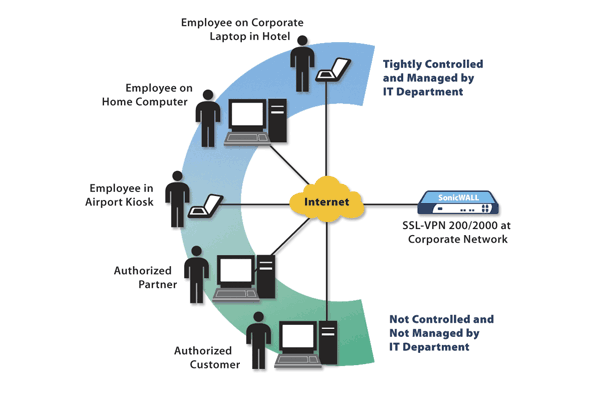
Virtual Private Network, or VPN, is a group of computers (or discrete networks) networked together over a public network—namely, the internet. Businesses use VPNs to connect remote datacenters, and individuals can use VPNs to get access to network resources when they're not physically on the same LAN (local area network), or as a method for securing and encrypting their communications when they're using an untrusted public network.
Photo by Pavel Ignatov(Shutterstock).
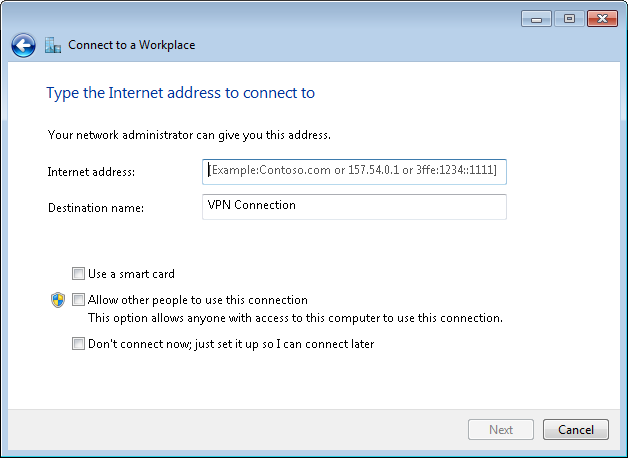
When you connect to a VPN, you usually launch a VPN client on your computer (or click a link on a special website), log in with your credentials, and your computer exchanges trusted keys with a far away server. Once both computers have verified each other as authentic, all of your internet communication is encrypted and secured from eavesdropping.
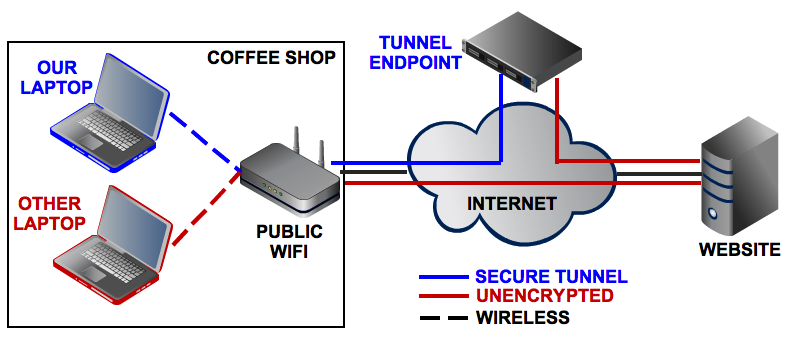
The most important thing you need to know about a VPN: It secures your computer's internet connection to guarantee that all of the data you're sending and receiving is encrypted and secured from prying eyes.
Whether the VPNs you're familiar with are the ones offered by your school or business to help you work or stay connected when you're traveling or the ones you pay to get you watch your favorite shows in another country as they air, they're all doing the same thing. For much more detail on what VPNs are, how they work, and how they're used,
check out this How Stuff Works article.
Why You Need a VPN, or How You Can Benefit from Using One
A VPN alone is just a way to bolster your security and access resources on a network you're not physically connected to. What you choose to do with a VPN is a different story. Usually, VPN users fall into a few separate categories:
- The student/worker. This person has responsibilities to attend to, and uses a VPN provided by their school or company to access resources on their network when they're at home or traveling. In most cases, this person already has a free VPN service provided to them, so they're not exactly shopping around. Also, if they're worried about security, they can always fire up their VPN when using airport or cafe WI-Fi to ensure no one's snooping on their connection.Photo by Ed Yourdon.
- The downloader. Whether they're downloading legally or illegally, this person doesn't want on some company's witch-hunt list just because they have a torrenting app installed on their computer. VPNs are the only way to stay safe when using something like BitTorrent—everything else is just a false sense of security. Better safe than trying to defend yourself in court or paying a massive fine for something you may or may not have even done, right?
- The privacy minded and security advocate. Whether they're a in a strictly monitored environment or a completely free and open one, this person uses VPN services to keep their communications secure and encrypted and away from prying eyes whether they're at home or abroad. To them, unsecured connections mean someone's reading what you say.
- The globetrotter. This person wants towatch the Olympics live as they happen, without dealing with their crummy local networks. They want to check out their favorite TV shows as they air instead of waiting for translations or re-broadcasts (or watch the versions aired in other countries,) listen to location-restricted streaming internet radio, or want to use a new web service or application that looks great but for some reason is limited to a specific country or region.
- Some combination of the above. Odds are, even if you're not one of these people more often than not, you're some mix of them depending on what you're doing. In all of these cases, a VPN service can be helpful, whether it's just a matter of protecting yourself when you're out and about, whether you handle sensitive data for your job and don't want to get fired, or you're just covering your own ass from the MPAA.
Even if none of the above really sound right to you, you can still benefit from using a VPN. You should definitely use one when you travel or work on an untrusted network (read: a network you don't own, manage, or trust who manages.) That means opening your laptop at the coffee shop and logging in to Facebook or using your phone's Wi-Fi to check your email at the airport can all
potentially put you at risk.
We've shown you
how to build your own VPN for remote gaming and browsing that also protects your security, shown you
how to make a VPN even more secure, and shown you dozens of services that operate free and paid VPNs you can sign up for and use. We've even put the question to
you several times to tell us which VPN service providers you think are the best. So how do you pick a solid VPN service?
What Makes for a Good VPN?
The best VPNs offer a solid balance of features, server location, connectivity protocols, and price. Some are great for occasional use, others are geared towards getting around the location restrictions companies put on their apps and services, and others are targeted at people who do heavy downloading and want a little privacy while they do it. Here's what you should look for.
- Protocol: When you're researching a VPN, you'll see terms like SSL/TLS (sometimes referred to as OpenVPN support,) PPTP, IPSec, L2TP, and other VPN types. We asked Samara Lynn, Lead Analyst for Networking and Small Business at PCMag, whether or not a user shopping for a VPN should shop for one over another. "SSL is what is commonly used these days. All of these protocols will provide a secure connection," she explained, and pointed out that most solutions are invisible to the end-user anyway. Strictly, each protocol has its benefits and drawbacks, and if you're concerned about this (specifically, PPTP vulnerabilities,) you're probably already aware of them. Most users don't need to be concerned about this—corporate users on the other hand, are probably all using IPSec or SSL clients anyway.
- Corporate and Exit Locations: Depending on what you're using a VPN for, your service's location—and the exit locations you can choose—are important to consider. If you want to get around a location restriction and watch live TV in the UK, for example, you want to make sure your VPN service provider has servers in the UK. If you're concerned about privacy or state-sponsored snooping, you may want to pick a service operated outside of your home country. Similarly, if the service is based on the US, they're subject to US laws, and may be forced to turn over usage data to the authorities upon request. Many people make more of this than they should (we've seen overseas services turn over their data to friendly governments without any hesitation repeatedly), but it's important to make sure a VPN has servers in multiple locations—or at least the location you're interested in—when shopping.
- Logging: When you connect to a VPN, you're trusting the VPN service provider with your data. Your communications may be secure from eavesdropping, but other systems on the same VPN—especially the operator—can log your data if they choose. If this bothers you (e.g., you're the privacy/security advocate or the downloader), make absolutely sure you know your provider's logging policies before signing up. This applies to location as well—if your company doesn't keep logs, it may not matter as much where it's located. (There's a popular rumor that US-based VPN providers are required to log, in case the government wants them. This isn't true, but the government can always request whatever data they have if they do log.) For a good list of VPN providers that don't log your activities when connected (and many that do), check out this TorrentFreak article.
- Anti-Malware/Anti-Spyware Features: Using a VPN doesn't mean you're invulnerable. You should still make sure you're using HTTPS whenever possible, and you should still be careful about what you download. Some VPN service providers—especially mobile ones—bundle their clients with anti-malware scanners to make sure you're not downloading viruses or trojans. When you're shopping, see if the providers you're interested in offer anti-malware protection while you're connected. For example, previously mentioned Hotspot Shield offers malware protection to its premium users. It may not be a dealbreaker for you, but it's always good to have someone watching your back.
- Mobile Apps: If you're going to spend money on a VPN service provider (or even if you use a free one, frankly), you should be able to get a consistent experience across all of your devices. Most prominent providers offer desktop and mobile solutions for individual users, and while corporate and school networks may be a bit behind the curve here, they're catching up too. Make sure you don't have to use two different VPNs with two different policies and agreements just because you want to secure your phone along with your laptop.
- Price: Finally, go into your user agreement with both eyes open. You should read the privacy policy for the service you're interested in, and be very aware of the differences between free and paid services. For example:
- Free VPN Providers are more likely to log your activities and serve contextual ads while you're connected. They're also more likely to use your usage habits to tailor future ads to you, have fewer exit locations, and weak commitments to privacy. They may offer great features, but if logging and privacy are important to you, you may want to avoid them. However, if you just need quick, painless security while traveling on a budget, they're a great option.
- Subscription VPN Providers usually take your privacy a bit more seriously, since you're paying for the service. It's unusual for them to show ads, although whether they do logging or store data about your usage varies from company to company. They usually offer free trials so you can give the service a shot first, but remember: just because you're paying for a service doesn't mean you shouldn't do your homework.
A mix of features and price make a good VPN, but plenty of bad VPNs masquerade as good ones. Look for articles written by trustworthy sources that discuss the merits of each service based on its features, versus simple rundowns and user testimonials, which are almost always polluted by a combination of fanatical users and corporate bootstrapping in attempt to get their names out to potential customers.
Which VPNs Are The Best?
When we
ran our recent Hive Five on VPN service providers, we heard from VPN providers begging to be included, angry CEOs who claimed their company was maliciously left out, and others accusing some of the contenders of illegal or unethical behavior. We took at look at the poll and the claims, and while there's no definitive proof the poll was gamed, we decided to come up with our own top five, based on our own research rather than reader feedback, that are great whether you're the privacy advocate, the student, or the downloader.
Supports: Windows, OS X, Linux, iOS, Android
Protocols: SSL, PPTP, IPSec, and L2TP. You can also configure Private Internet Access to work on your DD-WRT or Tomato router (via SSL/OpenVPN) for constant security.
Home Country: United States, and has exit servers in the US, Canada, the UK, Switzerland, Romania, and the Netherlands.
Logging Policies: The service keeps no logs of your activity whatsoever (in fact, the only things they do keep are your email address and payment information,) uses shared IPs, and has committed to keeping your data private.
Price: Pricing starts at $7/mo to $40/yr, and you can read more about their
plans and pricing here.
Supports: Windows, OS X, iOS
Protocols: SSL, PPTP.
Home Country: United States, with exit servers in the US, The Netherlands, Singapore, and the UK.
Logging Policies: proXPN keeps minimal logs of your activity. proXPN collects your email address, payment information (if you're a premium user,) bandwidth usage, connection duration, and login/logout times. They've committed to only keeping those logs for 14 days or less, and promise to never share their logs with anyone, period.
Price: proXPN has a free plan, which limits your transfer speeds to 300kpbs and restricts you to one exit location (Miami) in the United States. Premium accounts unlock support for PPTP (if you want to connect a mobile device or a router,) remove the transfer cap, and allows you to choose from any of the company's other exit locations. Premium plans start at $10/mo, and you can read more about their
pricing and plans here.
Supports: Windows, OS X, Linux, iOS, Android
Protocols: SSL (they often refer to it as OpenVPN), PPTP, and full SSH tunneling.
Home Country: Hungary, with exit servers in Hungary.
Logging Policies: The service doesn't log your connection aside from bandwidth usage to compare against your quota, and your payment details. They also are committed to your privacy, and specifically say they won't surrender their data without a Hungarian court order.
Price: Free TorVPN users are limited to 1GB/mo downloaded before they're cut off, and Premium accounts start at 5 EUR/mo ($7mo) for 5GB/mo and go up to 30 EUR/mo ($38/mo) for 100GB. Keep in mind they have a no-refunds policy, and that even though you ride the
Tor network, they're a separate entity from the
Tor Project. You can read more about their
pricing and plans here.
Supports: Windows, OS X, Linux, and iOS and Android via built-in VPN
Protocols: SSL (OpenVPN), PPTP, and L2TP, (with 256 bit security)
Home Country: Panama, with exit servers in The Netherlands, Romania, Ukraine and Panama.
Logging Policies: TorGuard wholeheartedly supports privacy, so you can feel a bit more secure that your connection is secure and anonymous. They purge their logs daily, and only keep payment information and registration info. They don't even keep login/logout times.
Price: Depending on whether you're the privacy advocate, the downloader, or a combination of the two, TorGuard offers plans specifically for anonymity (starting at $6/mo), for torrenting (starting at $5/mo), or for overall VPN services ($10/mo). You can read more about TorGuard's
pricing and plans here.
Supports: Windows, OS X, Linux, iOS, Android, webOS, Chromebooks.
Protocols: SSL, PPTP, IPSec, and L2TP (with 256 bit security)
Home Country: United States, with exit servers in 10 US cities, and countries in Latin and South America, Asia, Australia, Europe, Africa, and the Middle East—way too many to list here.
Logging Policies: WiTopia does not log information that can be attributable to individual users, purges logs weekly, and only saves registration information and payment details when you sign up.
Price: $50/yr to $70/yr depending on the level of encryption and protocols you need. They also sell a VPN router you can take with you when you travel. You can read more about WiTopia's
pricing and plans here.
Alternatively, Roll Your Own VPN
We've shown you how to
roll your own VPN using Hamachi, and even
how to set up Privoxy to secure your web browsing once you have your personal VPN set up. Hamachi isn't the only option: you can also download and configure
OpenVPN (a free SSL VPN) on your own home server,, or if you have a router that supports it, enable OpenVPN on your home router so you can connect back to it when you're abroad. Combined with Privoxy, you get the privacy and anonymity benefits of a VPN without spending a dime.
Both of these options put control in your hands, and while they're not quite as anonymous as subscription methods or offer international exit locations, they do give you the the most important benefits of a VPN: security, privacy, and anonymity while you're away from home.




Hotspot Shield Review